


Why Insects?
Insects are the foundation upon which almost all life on Earth is built. Though small and often overlooked, hated, feared, squashed... they vastly outnumber and outwork nearly every other group of animals; performing countless functions that keep the natural world running.
For hundreds of millions of years, they have shaped ecosystems, influenced the evolution of life, and helped create the living planet we know today. They are among the most abundant, diverse, and influential organisms ever to exist.
Yet insects are declining across the planet at an alarming rate, primarily due to human actions (ecosystem toxification via pesticides, urbanization, habitat loss & deforestation, climate change, etc). It's truly death by a thousand cuts, and protecting them is not about saving a few interesting species, it's about safeguarding the biological infrastructure that supports life on Earth. When insects thrive, entire ecosystems thrive alongside them. Their conservation offers one of the greatest opportunities to preserve biodiversity, strengthen ecological resilience, and secure a healthier future for generations to come. If humanity is serious about protecting the natural world, insects deserve to be among our highest conservation priorities, because insect conservation is the key to global environmental and wildlife conservation.
Many of us know the benefits insects play as pollinators, but their impact goes FAR beyond pollination. Before you grab that "nope" spray, please take a few minutes to understand some of the other benefits of insects we've listed here.
Food Webs

Take a look at this pyramid. You'll notice insects are the primary consumers - that is, they are the ones that are feeding on the producers (flora) that sustain the planet.
When an insect feeds on a plant, it takes the energy those plants gained from the sun and transfers it up (by becoming prey) all the way to the top of the food web as indicated by the hawk, a top predator.
However, once that top predator dies, it will go back to the ground, where once again insects will feed on and help decompose that animal to recycle those nutrients back into the soil, allowing the primary producers to survive and thrive.
So it's a cycle where the primary producers provide the base energy, but it's the insects that keep the producers alive and distribute that energy to the rest of the living world. If they collapse, so does everything else.
Watch a fantastic video on this at Khan Academy here.
Graphic by: Mariana Ruiz Villarreal (LadyofHats) for CK-12 Foundation

Pollination
Photo credit: Steve Colwell, Channel City Camera Club
It's estimated that 90% of all plants on earth are flowering plants, and up to 80% of those require insects to reproduce via pollination, which means over 76% of all plants on Earth cannot survive without direct insect intervention.
And pollinators come in all shapes and sizes and species. It's not all butterflies and honeybees - they just happen to be what we notice most because they're diurnal (flying during the day) and charismatic or farmed.*
Flies (even mosquitos), wasps, ants, beetles, true bugs, moths... all vital pollinators. Many plants even have specialized relationships with some of these other pollinators and have co-evolved with them.
*(honeybees are non-native to North America. They are not threatened and have been shown to actually be detrimental to our native species, outcompeting them on flowers and other natural resources.)

Nutrient Cycling
Photo credit: Lindsay Vivian / USFWS
Plants need more than just pollination to thrive. Most of them need healthy, nutrient-rich soils.
Soil is an ecosystem in itself: bacteria, fungi, nematodes, algae... all sorts of things contribute to soil health, but above all; insects are breaking down matter to allow these other organisms to efficiently decompose organic materials such as carrion (dead animals), feces, dead wood, detritus, and more. Insects will feed on these "undesirables" and convert them into fertilizer (frass, aka insect poop), enabling plants and other soil organisms to utilize the nutrients.
Without insects, our planet would be a stinky heap of poop and dead things.
_edited.jpg)
Soil Aeration
Photo credit: Graham Wise - Brisbane, Australia
What's the next most important thing a plant needs besides reproduction and nutrients?
Answer: Water!
Subterranean insects, such as cicada nymphs, ants, termites, etc. create tunnels underground. These tunnels allow water to flow more freely and spread further and deeper than they would with solid ground. Trees can grow taller, plants grow stronger, and in turn each of those will have stronger abilities to fight off infectious disease and adverse conditions, creating nutrient-dense, water-rich materials for the rest of life on Earth to utilize.

Photo credit: Irina Skinner
Biodiversity Architects
Insects are the architects of biodiversity. Imagine a group of native caterpillars eating your favorite apple tree in your yard. They're defoliating your tree, and could (over a long time and lots of consistent feeding) cause the death of that tree. This might not be ideal for you, but you put those same caterpillars in a forest filled with trees, and that defoliation will now allow sunlight to reach the forest floor. With greater sunlight brings new sun-loving saplings, young plants, and low-growing flora which can now grow and flourish. And with new plants, come new specialist feeders, which increases the amount of prey species, and thus increasing the amount of predators, and so on... creating biodiversity!
That's just one example of thousands of stories of how insects create biodiversity!

Aquatic Health
Aquatic insects, or those that live in streams, rivers, lakes, ponds, etc., contribute to the health of our waterways in a myriad of ways:
-
They provide the base of the food web in these ecosystems: They're food for fish, frogs, turtles, amphibians, birds, bats and more. Fishermen even make lures to mimic the aquatic insects of each season.
-
Some feed on dead leaves, algae, and other organic materials in the water, keeping everything clean and clear from excessive buildup of organic matter, which is also recycling those nutrients while preventing algal blooms and harmful buildup of bacteria.
-
Predatory aquatic insects such as dragonflies, damselflies, and diving beetles will feed on mosquito larvae, doing their part to help control mosquito populations (see next point).
-
Many aquatic insects eventually leave the water and fly on and around land. At that point, they become prey animals themselves, which is transferring energy between aquatic and terrestrial ecosystems when birds and other terrestrial animals feed on them.
_eatin.jpg)
Population Control
Photo credit: Stephan Sprinz
Predatory insects keep populations in check, so the herbivores don't get out of control - maintaining that balance between healthy defoliation and nutrient recycling.
Aside from just preying on insects, some such as the parasitoids will bring prey back to a burrow or tunnel in wood or underground, further contributing to soil aeration and nutrient cycling.
Heightened populations of herbivorous insects typically signals an increase in predators, often due to the increased presence of plant chemicals which act like an alarm system calling for someone to come help.

Food Security & Sustainability
Another way we can save insects... is by eating insects!
I know it sounds counter-intuitive, but stay with me.
It's estimated that insects require 99% less land, feed, and water per pound of protein than traditional livestock (beef, pork, chicken).
Roughly 1/3 of habitable land on Earth is used for livestock. (source)
If we were to switch just 50% of our traditional protein consumption with insect proteins, we would have an opportunity to rewild an unimaginable amount of land in the range of ~20 million km² (7.7 mi²). That's greater than the entirety of South America! Imagine the wildlife corridors from that, the carbon storage to help reverse climate change, the biodiversity increase... the overall health of our planet would rebound!
Since they require a fraction of the resources, and many can be raised on food waste (solving another problem), they are not just a sustainable and inexpensive source of food security that can be grown and harvested at home, it could be a truly restorative practice.
Unfortunately, there's stigma surrounding eating insects - they're seen as dirty, gross, or only for people of lower economic status, but that's far from the truth. They're delicious, nutrient rich, and easy to farm!

Climate Change
Source: NASA’s Scientific Visualization Studio
Insects directly mitigate the greenhouse gas emissions which are a product of carrion and droppings from livestock and other animals. For example, the dung beetle will not only consume the poop, but bring it into the ground as well, reducing the methane and other gases emitted during decomposition into the atmosphere while recycling the nutrients into usable forms (fertilizer) for plant growth.
But just by enriching the soil, promoting biodiversity, and healthy flora growth, they are the drivers of our planet's terrestrial carbon storage systems.
We can also protect habitats from deforestation and further carbon release and strengthen legal habitat protections by identifying endangered or threatened insects, new species, new ecological interactions, etc... so researching insect populations is important for global ecological conservation.

Evolution
Photo credit: Aleledias
So many of the colors, scents, flavors, shapes, sizes, and chemicals produced by nature can be attributed to the relationship between insects and the flora & fauna which surrounds them.
Your fruits and vegetables often taste the way they do either to attract seed-dispersal animals (including insects), or deter insects since some of those flavors are actually natural pesticides.
Flowers of different colors attract different insects, and many have invisible landing platforms for pollinators which are only visible to insects which can see on the ultraviolet spectrum.
Insect feeding wildlife such as anteaters and the aye-aye have evolved physical characteristics specifically for the insects which they eat.
These examples represent only a small glimpse of the profound influence insects have had on shaping the way our planet looks, smells, tastes, sounds, and operates.
_edited.jpg)
Economics
Photo credit: Flickr user oatsy40
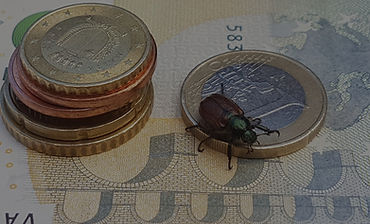
Insects are among the world's most valuable workers. Their pollination, pest control, nutrient recycling, and ecosystem services contribute hundreds of billions (and likely trillions) of dollars to the global economy every year. Through agriculture, pest control, medicine, industry, etc.
.jpg)
Medicine
Photo credit: National Cancer Insitute
Insects have made significant contributions to modern medicine and biomedical research, helping scientists understand disease, develop treatments, and improve patient care.
The fruit fly (D. melanogaster) has been one of the most important organisms in genetics and medical research, contributing to discoveries related to cancer, aging, Alzheimer's disease, Parkinson's disease, diabetes, and human development.
Mosquitoes, tsetse flies, and kissing bugs have also played a crucial role in the study of infectious diseases such as malaria, dengue, sleeping sickness, and Chagas disease, leading to advances in prevention, diagnosis, and treatment.
Other insects provide direct medical benefits through their unique biological properties. Sterile blow fly larvae are used in maggot debridement therapy to remove dead tissue and promote healing in chronic wounds, while silkworm-derived silk has been used in surgical sutures for centuries and is now being explored for tissue engineering and regenerative medicine. Researchers are also investigating compounds found in ants, wasps, beetles, cockroaches, and black soldier flies for their antimicrobial, anti-inflammatory, and potential drug-development applications.
Together, these insects continue to inspire new medical technologies and contribute to breakthroughs that improve human health.
Insects can represent a new avenue of bio-prospecting, that is, searching for new biological chemicals for health and medicine. Almost every time we discover a new insect, we discover a new chemical synthesized only by that insect (or insect family). Who knows what's out there waiting to be found!

Human Civilization
Behind every great civilization, is a great insect.
Insects have played a foundational role in the development of human civilization for thousands of years. They increase the productivity of wild and cultivated plants, supporting the growth of agriculture and enabling larger, more stable human populations. Insects also contributed valuable materials that shaped trade and industry such as silk produced by silkworms (Bombyx mori) which became one of the world's most important luxury goods and gave rise to one of the first major intercontinental trade networks: the Silk Road. It was a critical moment in human history as it not only became the largest land-based trade route for silk, but was the avenue for sharing ideas, cultures, innovations, governments, languages, and so much more.
They've been perpetual inspiration in our art, literature, poetry, folklore & religion, and industry.

Industry
In almost every industry, you can find evidence of insect influence, but just to name a few...
-
Silk has been a revered material for textiles for thousands of years. Used in clothing, military applications such as parachutes, and medicine (sutures).
-
The shellac you use when you get your nails done? A liquid that comes from the Lac bug. Which is also used as a glaze for candies and other foods.
-
Red dye? Commonly extracted from the crushed female Dactylopius coccus, or Cochineal scale bug. Used for food coloring, textile dyes, and cosmetics like lip stick.
-
Beeswax is used in foods, nutritional supplements, candles, soaps, cosmetics, medicine, lotions, and more.
Photo credit: Armin Kübelbeck

Innovation
Photo credit: Takashi Ozaki, Norikazu Ohta, Tomohiko Jimbo & Kanae Hamaguchi
In addition to industry, the innovations directly from insects, or inspired by insects (biomimicry) continue to provide solutions to issues of sustainability and create incredible new technologies such as;
-
Spider-silk producing silkworms (Kraig Biocraft Labs)
-
Insect-inspired robotics.
-
Military applications (swarm warfare, bulletproof vests, surveillance drones, etc.).
-
Cancer treatments.
-
Biochemical applications.
-
Flight efficiency models.
-
Energy conservation technologies.
-
Heating & Cooling systems derived from termite mound architecture.
-
Biomaterials and tissue regeneration.
-
Biodegredation of plastics.

Plastic Biodegredation
Photo credit: Fathiya Khamis
And some very exciting new research shows that several known species of insect such as black soldier fly larvae (Diptera), mealworms (Coleoptera), and waxworms (Lepidoptera) have been shown to not only feed on plastics, but due to their unique gut microbiomes, can actually convert it into clean, plastic-free byproduct (fertilizer/frass). In fact, in some studies, the insects which fed on plastic alone, vs plastic + oats/wheat, actually lived longer and grew larger!
This has massive implications to our growing global plastic waste problem, and while a lot more research needs to be done into scalable solutions, insects represent a light at the end of the tunnel for this issue.